IN YOUR BROADBAND
Light down glass
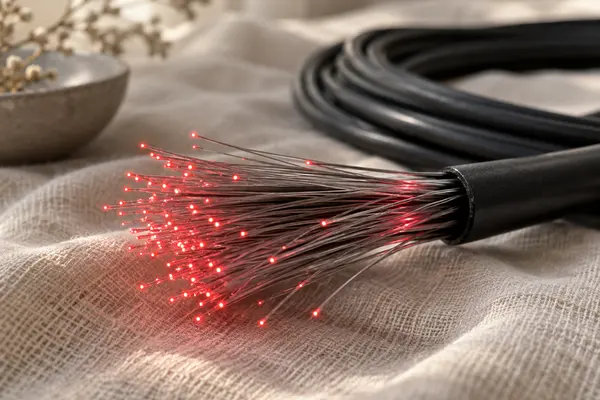
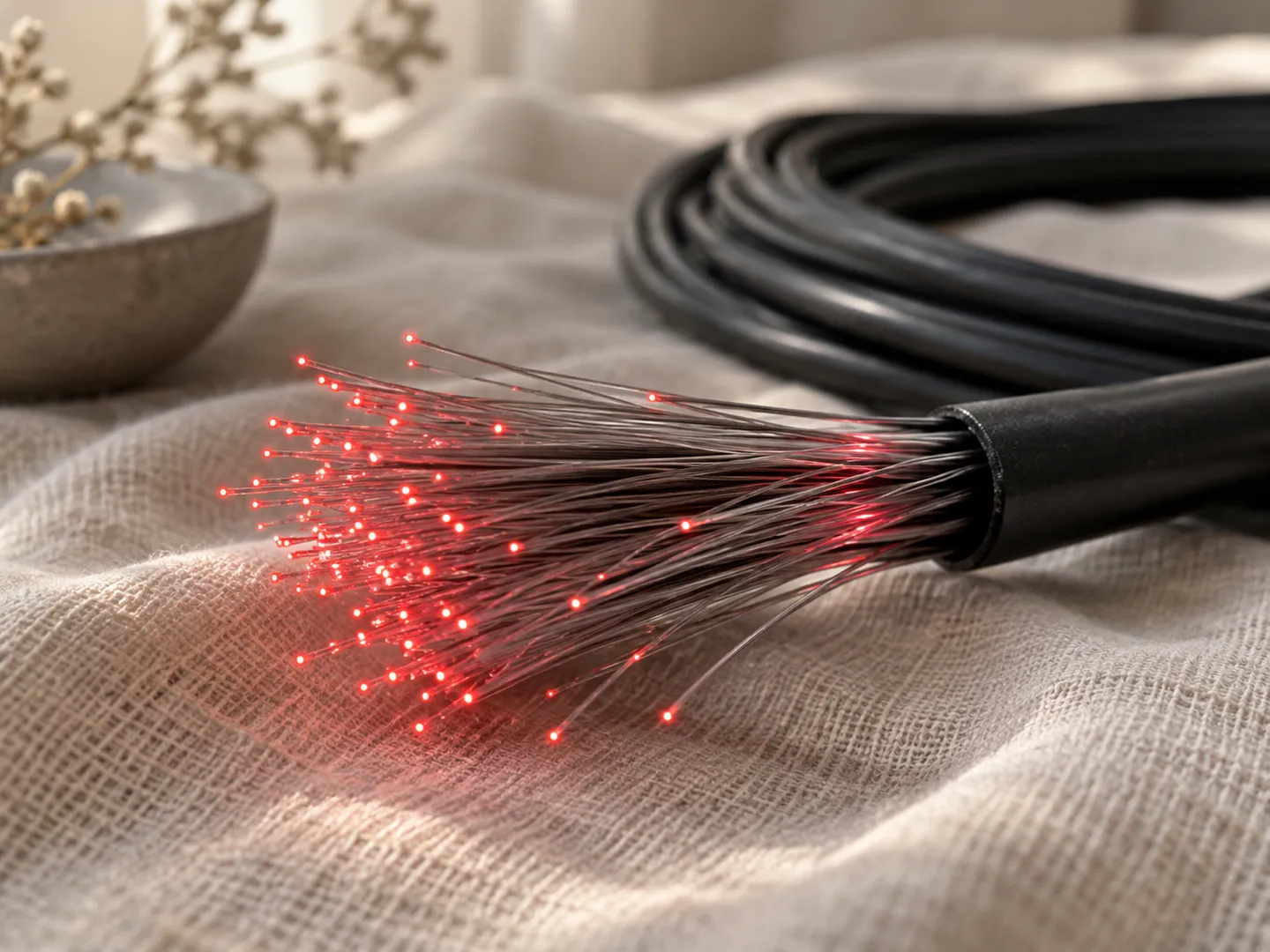
Optical fibre carries data as pulses of light. By 2009 there was over a billion kilometres of it around the world.
How it started
 doodlelaser
EVERYDAY LASERS, EXPLAINED
CLASS 2 read the label
From a ruby crystal in 1960 to the Moon, the internet and the pointer in your drawer.
A laser makes a narrow, intense beam of light by stimulated emission, an idea Einstein first raised in 1917. Here is where you meet lasers every day, and what the class printed on a laser product actually tells you.
Plain English, with the sources linked.
Updated
Check a laser classWHERE LASERS HIDE
Lasers left the laboratory long ago.
Three places you meet them, knowingly or not.
IN YOUR BROADBAND
Optical fibre carries data as pulses of light. By 2009 there was over a billion kilometres of it around the world.
How it startedIN SPACE SCIENCE
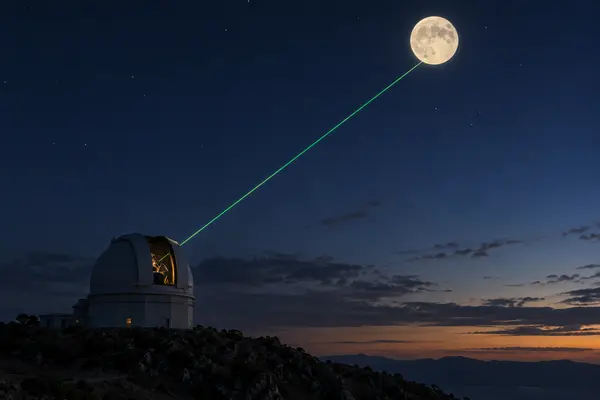
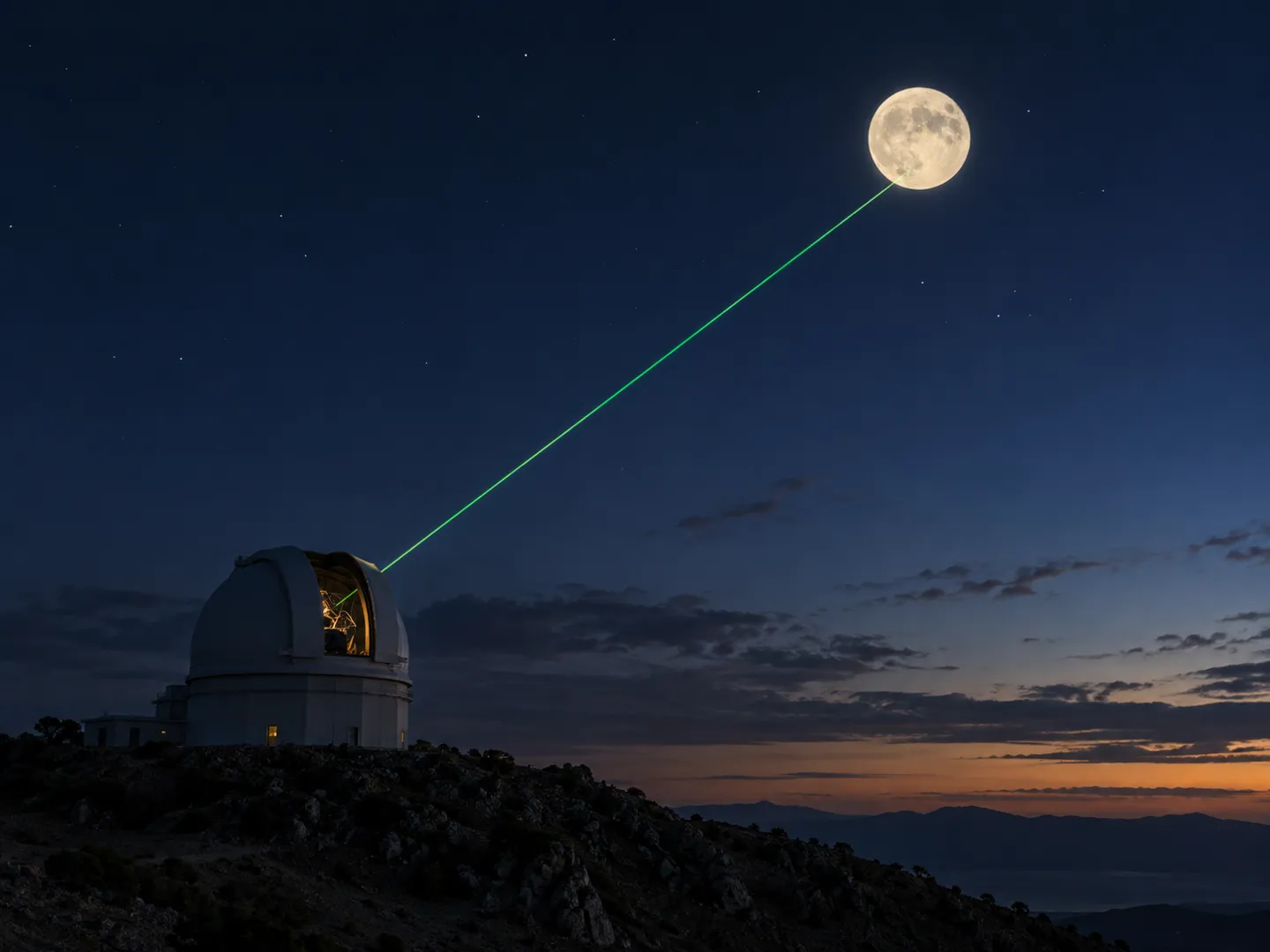
Laser pulses bounced off mirrors left by Apollo 11 show the Moon drifting away about 3.8 cm a year.
See the numbersIN YOUR HAND
Every laser product carries a class from 1 to 4. The number tells you how much care the beam needs.
Check a classA QUICK CLASS CHECK
Laser products are classified under the British Standard BS EN 60825, from Class 1 to Class 4. Pick a class to see how UKHSA, the UK Health Security Agency, describes it.
The meter shows the general order of hazard, not a measurement. The classes 1M and 2M also exist and can be harmful if the beam is viewed through magnifying optics.
TWO NUMBERS WORTH KNOWING
Lasers can measure the Moon to centimetres,
yet a cheap pointer's label can be badly wrong.
3.8 cm a year
Moon's yearly drift from Earth
Timing laser pulses reflected by the Apollo 11 panel of 100 corner cubes, placed in 1969, gave distances accurate to about two centimetres by 1999: better than one part in 10 billion.
LUNAR LASER RANGING · NASA
5 to 500× the output
Marked Class 2, measured as Class 3B
UKHSA gives the example of pointers marked Class 2 or under 1 mW that were really Class 3B. It says there is no simple test for non-specialists, and looking at a product tells you nothing about its risk.
MISLABELLED POINTERS · UKHSA
The same physics does both jobs. A tightly focused, single-colour beam travels far without spreading much, which is what makes it so useful for measuring, and why a strong one deserves respect.
SAFE HABITS
Look for the class on the product or its label. For a laser pointer, guidance based on BS EN 60825 says it should be no higher than Class 2.
UKHSA says consumer laser beams should never be pointed at people. Toys and other products aimed at children must not exceed Class 1.
Shining a laser at a plane is an offence under the Laser Misuse (Vehicles) Act 2018, with up to five years in prison for endangering an aircraft.
A label is not proof, and UKHSA says Class 3B and Class 4 lasers are not suitable for general consumer use. It advises medical attention if afterimages persist for hours.
LASER FACTS
Albert Einstein first raised the possibility of stimulated emission, the process at the heart of every laser, in a 1917 paper. It took more than four decades to build one.
On 16 May 1960 Theodore Maiman, working at Hughes Aircraft Company, produced a short burst of coherent light from an artificial ruby: the first working laser.
Apollo 11 left a 46 cm panel of 100 corner-cube reflectors on the Moon. Three more reflectors have been left since, and laser timing shows the Moon receding about 3.8 cm a year.
In 1966 Charles Kao calculated that very pure glass fibre could carry light more than 100 km, against about 20 m for fibres of the day. He shared the 2009 Nobel Prize in Physics.
The UK Civil Aviation Authority recorded 1,258 laser incidents involving aircraft in 2016, and an average of 1,422 a year from 2012 to 2016.
QUICK QUESTIONS
Short answers to the questions people ask most.
Guidance from the University of Edinburgh, based on the British Standard BS EN 60825, says a laser pointer should not be rated higher than Class 2. UKHSA adds that consumer laser products that appeal to children must not exceed Class 1.
UKHSA describes Class 2 lasers as safe for short exposures, because of our natural aversion to bright light. That is not the same as safe to stare into, and UKHSA says consumer laser beams should never be pointed at people.
Not always. UKHSA gives the example of pointers marked Class 2, or less than 1 mW, that measured as Class 3B, with 5 to 500 times higher output. It says there is no simple test for non-specialists and a visual inspection gives no indication of the risk.
Yes. Under the Laser Misuse (Vehicles) Act 2018, someone who endangers an aircraft with a laser can face an unlimited fine and a prison sentence of up to five years, according to the UK Civil Aviation Authority.
Observatories fire laser pulses at reflectors left on the Moon, starting with the Apollo 11 panel of 100 corner cubes, and time the light that comes back. NASA reported in 1999 that the measurements were accurate to about two centimetres and show the Moon moving away by about 3.8 cm a year.
Sources
A NAME WITH FOCUS
It is not open for bids or leasing right now. Browse the catalogue for names you can bid on or lease today.